 0411 752 873
  info@vicmetalroofing.com.au

Not sure if your roof needs repairs or a full replacement? This guide walks Melbourne homeowners through the key warning signs to watch for - and what to do next.
Roofs don’t fail overnight - they deteriorate gradually, and by the time the problem is obvious, costly damage to ceilings, insulation and the building frame may already have occurred. Knowing the warning signs early gives you options. Ignoring them usually turns a manageable replacement into an urgent and expensive emergency.
This guide covers the seven most common signs your roof needs replacing, how to tell the difference between a repair and a full replacement, and what Melbourne homeowners should consider when the time comes to act.
How Long Should a Roof Last in Melbourne?
Melbourne’s variable climate - hot summers, cold winters, sudden storms and intense UV - takes a real toll on roofing materials over time. Here’s a general guide to expected service life:
If your roof is approaching or has exceeded these ages, a professional inspection is strongly recommended - even if there are no obvious signs of failure yet.
- Terracotta & Concrete Tiles - 50+ years with regular maintenance and restoration
- Colorbond Metal Roofing - 40-70 years depending on installation and maintenance
- Fibro / Asbestos Cement - Pre-1990 homes often past safe service life; requires licensed removal
- Standard Concrete Tiles - Begin deteriorating after 25 to 30 years without restoration work
Sign 1: Your Roof Is Old or Nearing the End of Its Service Life
Age alone is one of the strongest indicators that a roof replacement is coming. Even a roof that looks fine from the street may be quietly deteriorating - losing its ability to shed water effectively, becoming brittle or developing hidden structural issues that won’t show up until water is already getting in.
If your home was built before 1990, there’s also a strong likelihood your roof contains asbestos cement sheeting - often called fibro or super six. As this material ages and weathers it can become hazardous, and will eventually need to be professionally removed and replaced by a licensed asbestos roof removalist.
If your roof is more than 25 to 30 years old, book a professional roof inspection. An experienced roofer can assess its true condition and give you an honest picture of how much useful life remains. If you suspect asbestos, read our guide to residential asbestos roof replacement.
Sign 2: Persistent or Recurring Leaks
A single leak after an extreme storm isn’t necessarily a sign your roof is failing. But if you’re experiencing recurring leaks - especially in multiple locations, or in the same spot after it’s already been repaired - this is a strong signal that the roof system itself is breaking down.
Common leak locations include:
When a roof starts leaking in multiple places, or the same repair keeps failing, patching becomes an expensive short-term fix on a system that needs replacing. The cost of repeated repairs will often exceed a full replacement within just a few years.
If you’ve had the same leak fixed more than once, or if water is entering your home in more than one spot, get a full roof inspection and ask for an honest comparison of repair versus replacement costs. Our residential re-roofing service covers the full process from old roof removal through to new installation.
- Flashings around chimneys, skylights and valleys
- Joins between roof sections or abutments
- Ridge capping that has cracked or lifted
- Cracked or slipped tiles
- Deteriorating or corroded metal roofing sheets
Sign 3: Visible Damage to Roofing Materials
Visible damage is one of the clearest signs your roof may need replacing. Walk around your property and look up - or ask a professional to inspect from the roof itself. Signs to look for include:
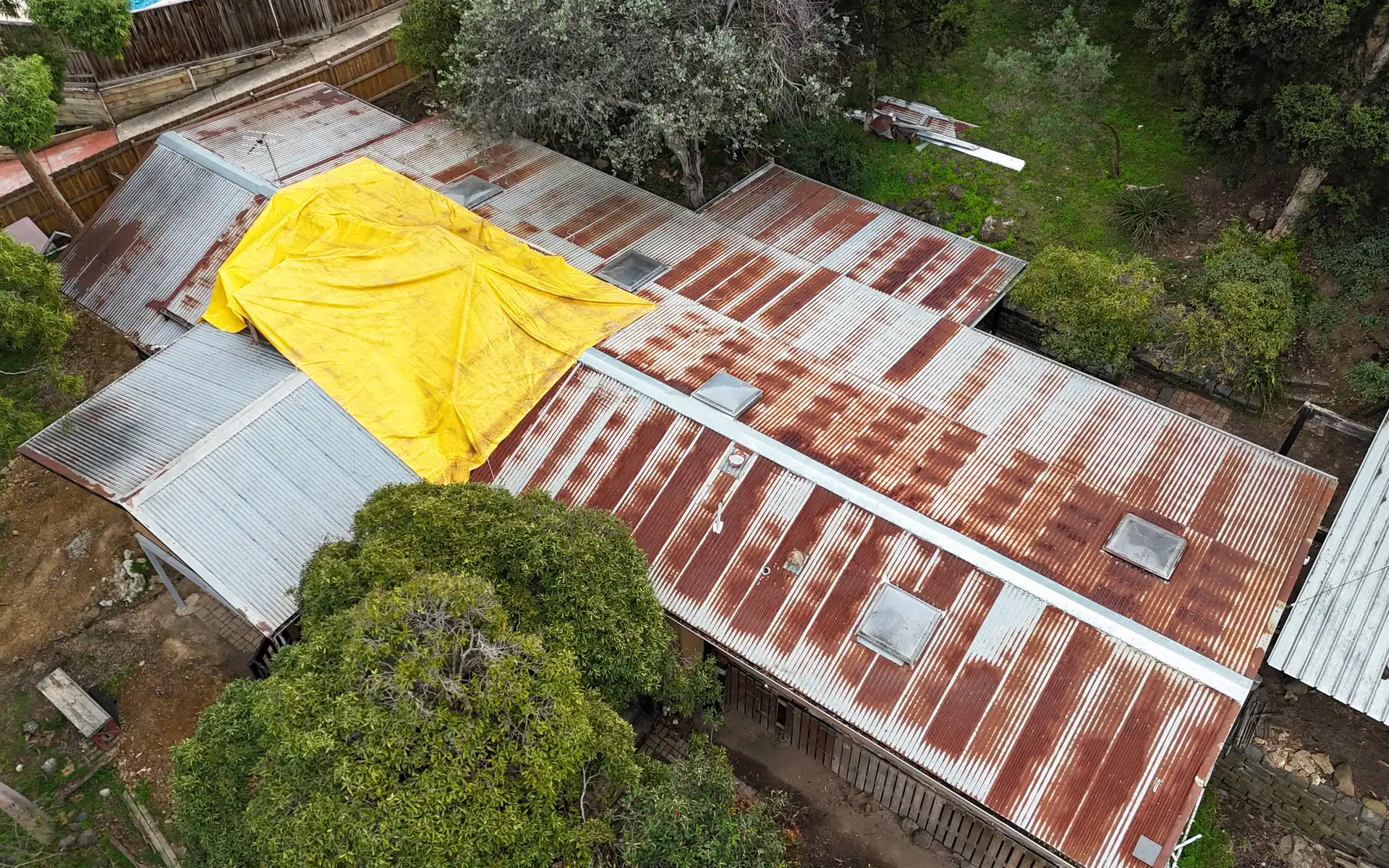
One or two cracked tiles can often be replaced individually. But widespread cracking, pervasive corrosion or large areas of damaged material point to a roof that has reached the end of its functional life. If your roof is fibro or cement sheeting, see our page on residential asbestos roof replacement for what’s involved.
If damage is isolated to a small section, repairs may be appropriate. If damage is spread across the roof, a full replacement will almost always be more cost-effective in the long run than ongoing patchwork repairs.
- Cracked, broken or slipped roof tiles
- Rusted or corroded metal roofing sheets
- Lifting, buckling or warped panels
- Significant moss, lichen or algae growth across large areas
- Missing or crumbling ridge capping
- Damaged, pulling-away or incorrectly installed flashings
Sign 4: Sagging or Structural Issues
A sagging roofline is a serious warning sign that should never be ignored. Sagging can indicate several underlying problems, including:
Unlike surface-level wear, structural problems won’t be solved by replacing roofing sheets or tiles alone. A sagging roof needs a thorough structural assessment before any work begins - and in most cases, a full replacement that addresses the underlying cause is the only safe long-term solution.
If you notice any sagging, dipping or unevenness in your roofline, contact a roofing professional immediately. This is not a problem to monitor and leave - it needs assessment now before further deterioration or failure occurs.
- Damage to roof decking or sarking beneath the roofing material
- Problems with rafters or structural roof timbers
- Long-term water infiltration causing timber rot
- In older homes, subsidence or movement in the building frame
Sign 5: Rising Energy Bills
Your roof plays a significant role in your home’s thermal performance. If your heating and cooling bills have been creeping up without an obvious explanation, a deteriorating roof could be part of the reason.
Older roofing materials - particularly uninsulated metal or fibro sheeting - provide very little thermal protection on their own. As these materials age and develop cracks, gaps or areas where they’ve lifted, they allow hot and cold air to pass through the roof more freely, placing greater load on your heating and cooling systems year-round.
A new metal roofing system installed with appropriate insulation and sarking can dramatically improve your home’s thermal efficiency, reduce energy bills, and make living spaces noticeably more comfortable in both summer and winter.
If your energy bills have risen or your home feels harder to heat and cool, include your roof in any broader assessment of your home’s performance. A new insulated metal roof can deliver significant ongoing energy savings.
Sign 6: Moss, Lichen and Biological Growth
A small amount of moss on a shaded section of roof isn’t necessarily cause for alarm. But heavy, widespread moss or lichen growth is a sign of moisture retention and biological breakdown that can significantly accelerate roof deterioration.
On tiled roofs, moss and lichen work into the tile surface and the mortar beneath ridge capping - causing cracking and loosening over time. On older cement or asbestos sheeting, biological growth accelerates the breakdown of the cement matrix, making the material friable and more likely to release fibres.
Left untreated, extensive biological growth can significantly shorten the remaining life of your roof and lead to water ingress as the degraded material beneath loses its ability to keep water out.
If moss or lichen covers a significant portion of your roof, have it professionally assessed. In some cases treatment and restoration is viable - in others, the underlying material has degraded to the point where replacement is the more practical option.
Sign 7: You’re Renovating or Planning to Sell
Not all roof replacement decisions are driven by obvious failure. If you’re planning a significant home renovation, extension or addition, it often makes sense to assess the roof at the same time. Replacing an ageing roof during a renovation avoids having to return to the job later - and gives you a consistent finish across the updated property. If your project also involves updating your exterior walls, our metal wall cladding service can be coordinated alongside the roof replacement.
Similarly, if you’re preparing to sell, a tired or visibly deteriorating roof will put buyers off and impact your sale price. A new metal roof is a tangible, visible improvement that adds real value - and removes a key objection that buyers and building inspectors regularly raise.
If you’re renovating or selling, get a roof assessment as part of your planning process. The cost of a new roof is often recovered in sale price, avoided future maintenance costs, or both.
Repair vs Replace - How to Decide
Not every roof issue requires a full replacement. Here’s a straightforward way to think through your decision:
Repair May Be Appropriate When:
Replacement Is Likely Better When:
A good roofing contractor will give you an honest assessment of both options - including a clear comparison of long-term repair costs versus the one-off investment of a replacement. Be cautious of anyone who pushes replacement without first properly assessing the extent of damage.
- Roof is relatively new with significant life remaining
- Damage is isolated to a small, specific area
- The underlying structure is sound
- Repair cost is clearly less than replacement amortised over remaining life
- This is the first time the issue has occurred
- Roof is old or approaching end of service life
- Damage is widespread across multiple areas
- The same repairs keep failing or recurring
- There are structural issues in the roof frame
- Roof contains asbestos materials
- Energy performance has significantly declined
Why Replace With Metal Roofing?
If your roof does need replacing, Colorbond metal roofing is one of the best long-term investments you can make for a Melbourne home. Here’s why thousands of Victorian homeowners choose metal:
✓ Lasts 50+ years with minimal maintenance
✓ Available in 22 Colorbond colours to suit any home style
✓ Improves thermal performance and reduces energy bills
✓ Increases property value and kerb appeal
✓ No repainting, re-sealing or ongoing maintenance required
✓ Handles Melbourne’s extreme weather conditions reliably
✓ 100% recyclable at end of life
Get a Free Roof Inspection
We offer free site inspections across Melbourne and Victoria. We’ll give you an honest, no-obligation assessment and clearly explain your options.


